Lingual Braces: The Hidden Alternative to Traditional Braces
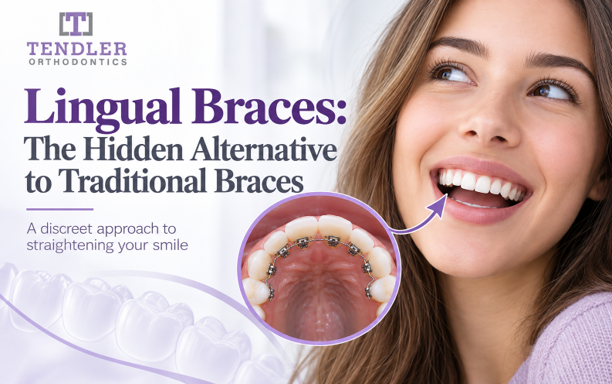
Not every patient who wants straighter teeth wants everyone to know they're in treatment. For adults balancing orthodontic care with a professional image, or teens who are self-conscious about a mouth full of metal, lingual braces offer a way to get the same reliable results as traditional braces while keeping the hardware essentially invisible.
They're one of the least talked-about options in orthodontics, largely because most patients have never heard of them — but for the right candidate, they can be a genuine game changer.
What Are Lingual Braces?
Lingual braces work exactly like traditional braces in terms of mechanics — small brackets and a connecting wire apply steady pressure to gradually move teeth into better alignment. The difference is placement. Instead of being bonded to the front (facial) surface of the teeth, lingual brackets are custom-fitted to the back (tongue-side, or "lingual") surface, which faces inward toward the tongue. From the outside, looking directly at someone's smile, there's nothing to see at all.
This back-of-the-teeth approach isn't new — lingual orthodontics has been refined for decades — but it has become far more precise and comfortable as digital scanning and custom bracket fabrication have improved. Modern lingual systems are designed using a 3D model of each patient's teeth, so the brackets sit closer to the tooth surface and interfere less with the tongue than earlier generations of lingual hardware did.
How Lingual Braces Differ From Other Orthodontic Options
Patients considering discreet orthodontic treatment usually compare three options: ceramic braces, clear aligners, and lingual braces. Traditional metal braces remain the most visible but also one of the most efficient and budget-friendly ways to treat a wide range of bite and alignment issues.
Ceramic braces use tooth-colored brackets on the front of the teeth, which blend in but are still visible up close. Lingual braces take invisibility a step further by removing the hardware from view entirely, since it's mounted on the inside surface of the teeth rather than the outside.
Because lingual braces are fixed to the teeth for the full course of treatment — unlike removable clear aligners — they tend to work well for more complex cases involving significant rotation, bite correction, or crowding that aligners alone may not fully resolve. Some patients also find that fixed, custom-fabricated brackets, similar in concept to the precision offered by custom 3D-printed brace systems, provide more predictable, efficient tooth movement than a series of removable trays.
Who Is a Good Candidate for Lingual Braces?
Lingual braces can treat many of the same orthodontic issues as traditional braces, including crowding, spacing, and certain bite problems. That said, they aren't the right fit for every case. Patients with very short clinical crowns, significant bite issues involving the lower front teeth, or certain types of severe crowding may find lingual brackets less practical, since the appliance sits in close proximity to the tongue and needs adequate room on the back tooth surface.
Adults are often the strongest candidates, both because their orthodontic needs are frequently less complex than a child's developing bite and because the aesthetic appeal of invisible treatment tends to matter more in professional and social settings.
Teens who are especially self-conscious about visible braces, and who are diligent about oral hygiene, can also be excellent candidates. A consultation and a full evaluation of your bite, tooth shape, and treatment goals is the only reliable way to know whether lingual braces make sense for your specific situation.
What to Expect During Lingual Braces Treatment
Treatment typically begins with digital scans or impressions of your teeth, which are used to design and fabricate brackets custom-fitted to the back surface of each tooth. Because the brackets are individually made rather than mass-produced, there's usually a short waiting period between your consultation and your bonding appointment while the lab prepares your custom set.
Once bonded, lingual braces function the same way traditional braces do — periodic adjustments over the course of treatment gradually shift the teeth into their corrected positions. Most patients need some time to adjust to the feel of brackets on the inside of their teeth, and it's common to notice a temporary change in speech during the first one to two weeks as the tongue adapts to the new surface. This typically resolves on its own as patients get used to talking and eating with the appliance in place.
Benefits of Choosing Lingual Braces
The most obvious benefit is aesthetics — lingual braces are completely hidden from view during everyday conversation, smiling, and photos, which makes them appealing to adults in client-facing careers, performers, and anyone who simply prefers not to broadcast that they're in orthodontic treatment. Beyond appearance, lingual braces offer the same reliable, continuous tooth movement as traditional fixed braces, since they aren't removed for eating or forgotten the way aligner trays sometimes are.
Custom fabrication is another advantage. Because each bracket is designed specifically for the contours of an individual tooth, many patients find the fit more precise than a standardized, off-the-shelf bracket system, which can translate to fewer adjustment visits over the course of treatment and a smoother overall experience.
Potential Drawbacks and Challenges
Lingual braces aren't without trade-offs. The initial adjustment period tends to be more noticeable than with front-mounted braces — patients often describe more tongue irritation in the first few weeks as the tongue gets used to brushing up against the brackets throughout the day. Speech changes, particularly with certain sounds, are also more common initially compared to traditional or ceramic braces.
Cleaning can also require a bit more attention, since the brackets sit in an area that's harder to see directly in a mirror. Most patients adapt within a few weeks with the help of a small handheld mirror and guidance from their orthodontic team on proper brushing technique around the back-facing brackets. Lingual braces also tend to involve a higher cost than traditional metal braces, given the custom fabrication process, and not every orthodontic practice offers them, since they require specialized training to place and adjust.
Lingual Braces vs. Clear Aligners
Both lingual braces and clear aligners aim to solve the same problem — straightening teeth without visible metal — but they work differently. Clear aligners are removable, which many patients appreciate for eating and cleaning, but that same flexibility means results depend heavily on wearing them as prescribed, typically 20 to 22 hours a day. Lingual braces, being fixed, remove that variable entirely; they're working around the clock without requiring daily compliance.
Clear aligners also tend to be better suited to mild-to-moderate alignment issues, while lingual braces can address more complex bite and rotation problems, similar to traditional braces. If you've been told your case may be too complex for aligners alone but you still want a discreet option, lingual braces are worth discussing at your next consultation.
Caring for Lingual Braces
Good oral hygiene matters even more with lingual braces, since food particles and plaque can collect around the brackets in a spot that's harder to monitor visually. A soft-bristled toothbrush, a water flosser or floss threader, and a consistent daily routine go a long way toward keeping both the teeth and the appliance clean throughout treatment. Sticky, hard, or extremely chewy foods should generally be avoided, just as they would be with any fixed brace system, since they can dislodge or damage a bracket.
Regular adjustment visits are essential for tracking progress and catching any bracket issues early. If a bracket feels loose, sharp, or is causing significant tongue irritation between visits, it's worth calling your orthodontist rather than waiting for your next scheduled appointment.
How Much Do Lingual Braces Cost?
Lingual braces generally cost more than traditional metal braces due to the custom lab fabrication involved in creating brackets for each individual tooth. The exact cost depends on the complexity of your case, the length of treatment, and your geographic location.
Many orthodontic practices offer financing plans that spread the cost over the course of treatment, and it's worth asking whether your dental insurance provides any orthodontic benefit that could apply, since coverage varies significantly by plan.
Conclusion
Lingual braces occupy a unique niche in orthodontics: the same dependable, always-on tooth movement as traditional braces, with none of the visible hardware. They aren't the right choice for every case or every patient, but for those who qualify, they offer a compelling middle ground between the effectiveness of fixed braces and the discretion many adults are looking for.
The American Association of Orthodontists' overview of braces and treatment options is a helpful resource for understanding how lingual braces compare to other approaches. To find out whether lingual braces are right for you, contact our Boca Raton office to schedule a consultation.
Frequently Asked Questions
Are lingual braces really invisible?
Yes. Because the brackets are bonded to the back surface of the teeth, they aren't visible when looking at someone's smile from the front.
Do lingual braces hurt more than regular braces?
Discomfort levels are similar overall, though many patients notice more tongue irritation in the first couple of weeks as the tongue adjusts to the brackets.
How long does treatment with lingual braces take?
Treatment time is comparable to traditional braces and depends on the complexity of the case, though most patients wear braces for 12 to 24 months.
Can lingual braces fix the same issues as traditional braces?
In most cases, yes. Lingual braces can treat a wide range of bite and alignment issues, though a small number of complex cases may not be suitable candidates.
Do lingual braces affect speech?
Some patients notice a temporary change in speech during the first one to two weeks of treatment, which typically resolves as the tongue adapts.
About the Author
This article was reviewed by Dr. Minelle Tendler, DMD, of Tendler Orthodontics. Dr. Tendler earned her bachelor's degree in biology from Boston College and her dental degree from the University of Puerto Rico School of Dental Medicine, graduating magna cum laude and in the top 2% of her class. She completed her residency in orthodontics and dentofacial orthopedics at NOVA Southeastern University College of Dental Medicine and is board eligible for the American Board of Orthodontists. Tendler Orthodontics is located at 199 West Palmetto Park Road, Suite D, Boca Raton, FL 33432, and provides orthodontic care for children, teens, and adults throughout Boca Raton and Palm Beach County, Florida.
Disclaimer
This article is intended for general informational purposes only and does not constitute dental or medical advice. It is not a substitute for professional evaluation, diagnosis, or treatment by a licensed orthodontist. Always consult a qualified orthodontic professional regarding your specific treatment needs.
Blog Post Author

Contributed by DentalROI
DentalROI provides relevant dental content to help providers educate patients. The statements, services, and products referenced in this article have not been evaluated by the Food and Drug Administration, and they are not intended as a substitute for professional medical advice, diagnosis, or treatment. Always seek the advice of your dental provider with any questions or issues you may have. Specific recommendations may vary in different circumstances, so individual consultation is important.