How to Care for Your Retainer After Braces
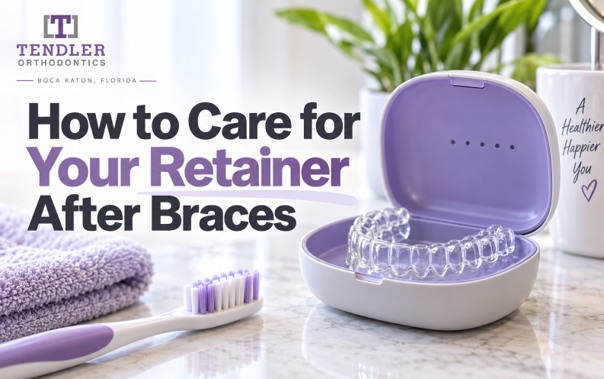
Getting your braces off is a milestone worth celebrating, but the work of keeping your new smile in place isn't quite finished. Every orthodontic patient is given a retainer once active treatment ends, and how well you care for it directly affects how well your results hold up over the years. Understanding the basics of retainer care from day one makes the transition out of braces much smoother.
Why Retainers Are Necessary After Braces
Teeth are surrounded by ligaments and bone that need time to stabilize in their new positions after orthodontic treatment. Immediately after braces come off, teeth are still somewhat mobile and can begin drifting back toward their original positions, a process orthodontists call relapse. A retainer holds the teeth steady while the surrounding bone and gum tissue remodel and firm up around them, which is why skipping retainer wear is one of the most common reasons a beautiful result from braces doesn't last.
This is true regardless of which type of braces you had. Whether your treatment involves traditional metal brackets, a custom bracket system, or another appliance entirely, the retention phase that follows is just as important as the active treatment itself.
Types of Retainers
There are two broad categories of retainers, and many patients receive one of each, one for the upper arch and one for the lower.
Removable retainers, such as a clear plastic (Essix-style) retainer or a wire-and-acrylic Hawley retainer, can be taken out for eating, brushing, and special occasions, though they need to be worn as instructed to be effective. Fixed, or bonded, retainers are thin wires cemented to the back of the front teeth, most often on the lower arch, and stay in place continuously without requiring the patient to remember to wear them. Some patients are given a combination, a bonded wire retainer for one arch and a removable retainer for the other, depending on their specific case and relapse risk.
How Long Do You Need to Wear a Retainer?
Most orthodontists recommend wearing a removable retainer full-time, including overnight, for the first several months after braces come off. After that initial period, many patients transition to nighttime-only wear, though the exact schedule depends on your individual case and your orthodontist's recommendation. Bonded retainers, by contrast, are designed to stay in place for years, sometimes indefinitely, since they require no daily effort from the patient.
A common misconception is that retainer wear is temporary, something to get through for a year or two before being finished entirely. In reality, most orthodontists consider some degree of long-term or even lifelong retention necessary, since teeth can continue to shift subtly throughout life even long after orthodontic treatment ends. Skipping retainer wear once it starts feeling optional is one of the most frequent causes of teeth relapsing back toward their pre-treatment positions.
Daily Cleaning: Removable Retainers
Clean a removable retainer every day, ideally each time you take it out. Rinse it with lukewarm (never hot) water immediately after removing it, since saliva and plaque harden quickly and become more difficult to remove the longer they sit. Brushing gently with a soft toothbrush and a small amount of mild soap or clear, non-abrasive toothpaste helps remove buildup without scratching the plastic or wire.
Avoid hot water and dishwashers entirely, heat can warp a plastic retainer, permanently changing its fit and making it far less effective at holding your teeth in position. For a deeper clean once or twice a week, a soak in a denture or retainer cleaning tablet, or a mix of water and a small amount of white vinegar, can help remove buildup that daily brushing misses. Whatever you use, rinse the retainer thoroughly afterward before putting it back in your mouth.
Daily Cleaning: Bonded (Fixed) Retainers
A bonded retainer requires more deliberate flossing technique since it's cemented permanently behind the teeth. A floss threader or a water flosser makes it much easier to clean underneath and around the wire, where a standard string of floss can't easily reach on its own. Skipping this step allows plaque to build up around the wire, which raises the risk of cavities and gum irritation right where the retainer is bonded.
Brush thoroughly around the wire every time you brush your teeth, angling the bristles to reach both above and below it. If you ever notice the wire feels loose, or a section has come detached from one of your teeth, contact your orthodontist promptly, a partially detached bonded retainer can shift and irritate the tongue or cheek, and it's no longer effectively holding your teeth in place.
Handling and Storage
Removable retainers are easy to misplace, especially in the first few weeks after braces when the habit of taking care of a removable appliance is still new. Always store your retainer in its designated case when it's not in your mouth, never in a napkin, tissue, or pocket, all of which are common ways retainers get thrown away or lost. Keep retainers away from pets as well, since dogs in particular are drawn to the smell of saliva on plastic and will happily chew through a retainer left within reach.
Avoid leaving a retainer in a hot car or near any direct heat source, since plastic retainers can warp even without being submerged in hot water. If your retainer ever feels tight, loose, or noticeably different from how it normally fits, that's worth mentioning to your orthodontist at your next visit rather than assuming it will correct itself.
What Happens If You Lose or Break Your Retainer
If a removable retainer is lost, cracked, or broken, contact your orthodontist as soon as possible rather than waiting until your next scheduled visit. Teeth can begin shifting within days of going without a retainer, particularly in the months immediately following braces, so a delay in replacing a lost retainer can undo some of the progress made during active treatment. Most orthodontic offices can fabricate a replacement fairly quickly, especially if they still have your most recent dental impressions or digital scan on file.
The same urgency applies to a bonded retainer that comes loose or breaks. Because it's designed for continuous wear, even a short gap without it holding the teeth in place can allow noticeable movement, particularly in patients who had significant crowding or rotation corrected during treatment.
Signs Your Retainer No Longer Fits
A retainer that once fit snugly but now feels loose, or one that's suddenly difficult to seat all the way, can be an early sign that teeth have already begun shifting. This is worth reporting to your orthodontist rather than continuing to force a retainer that doesn't fit properly, since forcing a poorly fitting appliance can cause discomfort without actually correcting the underlying movement. In some cases, a short course of clear aligners or a new retainer impression may be recommended to bring teeth back in line before returning to standard retention.
Routine retainer check appointments, even after active orthodontic treatment has ended, help catch these changes early. If you're not sure how often you should be seen for a retainer check, it's a good question to bring up at your last appointment before your active treatment concludes.
Long-Term Retention Habits
Think of retainer wear as an ongoing part of oral health, similar to brushing and flossing, rather than a temporary requirement that ends after a set period. Many orthodontists recommend continuing nighttime wear of a removable retainer indefinitely, since the alternative, teeth gradually drifting over years, is far more difficult and costly to correct than simply maintaining a wear habit that takes a few minutes each night.
If you're years out from finishing treatment and unsure whether your retainer still fits or whether you should be wearing it more consistently, it's never too late to schedule a check-in. Catching minor shifting early is almost always easier to manage than waiting until teeth have moved significantly out of alignment.
Conclusion
The retention phase is just as important to your orthodontic results as the months or years you spent in braces. Consistent wear, careful daily cleaning, and safe storage habits protect the investment you made in your smile and help ensure your results last for years to come. The American Association of Orthodontists' guide to orthodontic retainers offers additional detail on retainer types and care. If your retainer needs an adjustment, repair, or replacement, Tendler Orthodontics can help. Contact our Boca Raton office to schedule a visit.
Frequently Asked Questions
How long do I need to wear my retainer after braces?
Most patients wear their retainer full-time for the first several months, then transition to nighttime-only wear. Many orthodontists recommend some degree of long-term or lifelong retention to prevent relapse.
Can I clean my retainer with hot water?
No. Hot water can warp a plastic retainer and permanently affect its fit. Always use lukewarm or cool water when rinsing.
What should I do if I lose my retainer?
Contact your orthodontist right away. Teeth can begin shifting within days of going without a retainer, so prompt replacement matters.
How do I clean a bonded (fixed) retainer?
Use a floss threader or water flosser to clean underneath and around the wire daily, and brush thoroughly around it to prevent plaque buildup.
What if my retainer suddenly feels tight or won't fit?
This can be an early sign of tooth movement. Contact your orthodontist rather than forcing the retainer into place.
About the Author
This article was reviewed by Dr. Minelle Tendler, DMD, of Tendler Orthodontics. Dr. Tendler earned her bachelor's degree in biology from Boston College and her dental degree from the University of Puerto Rico School of Dental Medicine, graduating magna cum laude and in the top 2% of her class. She completed her residency in orthodontics and dentofacial orthopedics at NOVA Southeastern University College of Dental Medicine and is board eligible for the American Board of Orthodontists. Tendler Orthodontics is located at 199 West Palmetto Park Road, Suite D, Boca Raton, FL 33432, and provides orthodontic care for children, teens, and adults throughout Boca Raton and Palm Beach County, Florida.
Disclaimer
This article is intended for general informational purposes only and does not constitute dental or medical advice. It is not a substitute for professional evaluation, diagnosis, or treatment by a licensed orthodontist. Always consult a qualified orthodontic professional regarding your specific retainer or treatment needs.
Blog Post Author

Contributed by DentalROI
DentalROI provides relevant dental content to help providers educate patients. The statements, services, and products referenced in this article have not been evaluated by the Food and Drug Administration, and they are not intended as a substitute for professional medical advice, diagnosis, or treatment. Always seek the advice of your dental provider with any questions or issues you may have. Specific recommendations may vary in different circumstances, so individual consultation is important.